
WhatsApp Just Let You Ditch Your Phone Number. Here's Why That's Bigger Than It Sounds.
WhatsApp launched usernames in June 2026. No more sharing your phone number to start a conversation. Here's what changed, how to set it up, and why it matters.
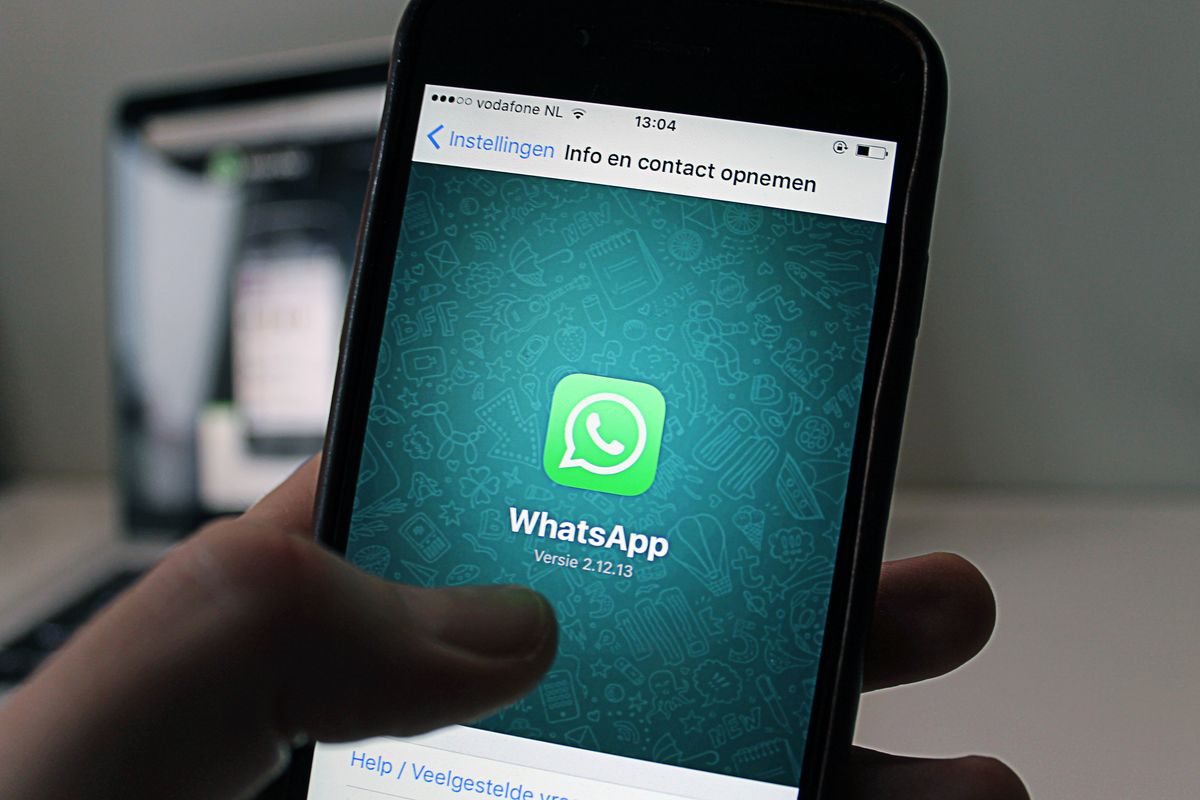
WhatsApp Just Let You Ditch Your Phone Number. Here’s Why That’s Bigger Than It Sounds.
Three billion people use WhatsApp. Until June 2026, every single conversation started with someone having your phone number — a trade-off most users accepted without thinking too hard about it.
That trade-off is now optional.
Meta began rolling out WhatsApp usernames in June 2026, describing it as one of the platform’s most significant privacy changes since end-to-end encryption was added in 2016. Instead of sharing a phone number to receive a message from someone new, you can share a username. Clean. Private. And if you ever want to stop receiving messages from a specific context, reversible.
The feature sounds minor. It isn’t.
What the WhatsApp Username Feature Actually Does
The mechanics are straightforward. You create a unique username — between three and 35 characters — using lowercase letters (a–z), numbers (0–9), underscores, and periods. People can then use that username to message you without seeing your phone number at any point.
A few rules worth knowing:
-
Usernames cannot start with “www.” — WhatsApp doesn’t want users mistaking a handle for a website link.
-
Usernames cannot end with a domain extension like .com or .net, for the same reason.
-
There is no public directory and no suggestion engine. Someone needs your exact username to find you. That’s intentional — it’s a design choice, not a gap.
There’s also an optional secondary layer: a short numeric “username key” you can attach to your handle. To contact you, someone would then need both the username and the correct key — effectively a two-part credential. Most users won’t need this. It’s built for journalists, public figures, or anyone who shares their handle widely but wants to control inbound volume.
To set yours up: update WhatsApp to the latest version, go to Settings → Account → Username, and claim your handle.
Why Meta Built This Now
The timing isn’t accidental.
WhatsApp has been in ongoing tension between its original utility — near-universal reach via phone number — and a growing expectation that messaging apps should not force you to expose personal contact information to strangers, new business contacts, or online communities.
Signal solved this years ago with its own usernames feature. Telegram has had handles since its early days. WhatsApp, with three billion users and a far more complex web of existing contacts and relationships, had to move more carefully. A change that breaks contact discovery for even a small percentage of its base affects hundreds of millions of people.
The European angle matters too. Data protection law in the EU creates ongoing pressure on platforms to minimise what personal data gets shared between parties who haven’t explicitly agreed to share it. A messaging system that doesn’t require phone number exchange is a cleaner compliance story — particularly as regulators look more closely at how platforms handle contact data at scale.
What This Changes for Businesses
If your business uses WhatsApp for client communication — which is common across Nigeria, the Gulf, Southeast Asia, and most of Africa — this update changes a few practical things.
Inbound contact without number exposure. You can now publish a WhatsApp username on your website, social profiles, or business card, and receive messages from new contacts without the underlying phone number being accessible to them. For businesses that share a number across multiple team members, this matters both for privacy and operational cleanliness.
Less room for error. A username is easier to share and type accurately than an international phone number. +234 704 503 8987 has more failure points than @rangemaxtech — no country code confusion, no missing zero, no accidental transposition.
WhatsApp Business compatibility. The username feature works with WhatsApp Business accounts. It adds a clean layer of separation between your brand identity and the specific phone number registered to the account — useful if the account is managed by more than one person, or if you ever need to change numbers without losing brand recognition.
What doesn’t change. Existing contacts can still reach you via your number. Groups, history, and media stay exactly as they are. The username is an additional contact method, not a replacement for the existing system.
A Note on the Rollout
As of early July 2026, the username feature is still expanding gradually. Not every user has access yet. If Settings → Account doesn’t show a Username option, it hasn’t reached your account — keep the app updated and it will appear.
When it does: claim your handle early. Usernames are unique and first-come, first-served. If your brand name is recognisable, there’s a real chance someone else will claim the obvious handle before you think to.
The Broader Shift This Represents
WhatsApp started as a phone-number-based system because phone numbers were the one identifier almost everyone had. That made sense in 2009. In 2026, the same logic that made phone numbers universal — everyone has one — has also made them a liability. They’re tied to identity in ways that create real exposure: SIM swaps, number spoofing, harassment, unwanted contact from old business contexts.
Usernames decouple the communication channel from the personal identifier. That’s not a minor privacy tweak. It’s a shift in what it means to be reachable.
Other platforms — Telegram, Signal, even LinkedIn — have operated this way for years. WhatsApp arriving here is less a moment of innovation than a moment of alignment with where user expectations already are.
At Rangemax Tech, we help businesses make sense of how platform changes like this affect their digital presence and communication setup. If you want to think through what this means for your client-facing channels, we’re easy to reach — and yes, you’ll be able to message us on WhatsApp without needing our number soon enough.
Keep reading
Subscriptions, AI Mode, grid reordering, WhatsApp usernames. Meta has had one of its busiest product years in recent memory. Here's what actually matters for businesses.
Read more →
Since October 1, 2026, Meta charges for WhatsApp replies once a business number passes 1,000 a month. Here's the Nigeria rate, a worked example, and the one setting that can stop your replies.
Read more →
Most auto-replies say nothing a customer didn't already know. Here's how to set up greeting and away messages in WhatsApp Business, what to write, and where the free tool stops.
Read more →Start small, then add what's next
Fixed prices, quoted before work starts. Not sure which fits? Run the free Website Grader first.
Want this implemented for your business?
Get a quick recommendation based on your goals, traffic sources and current setup.