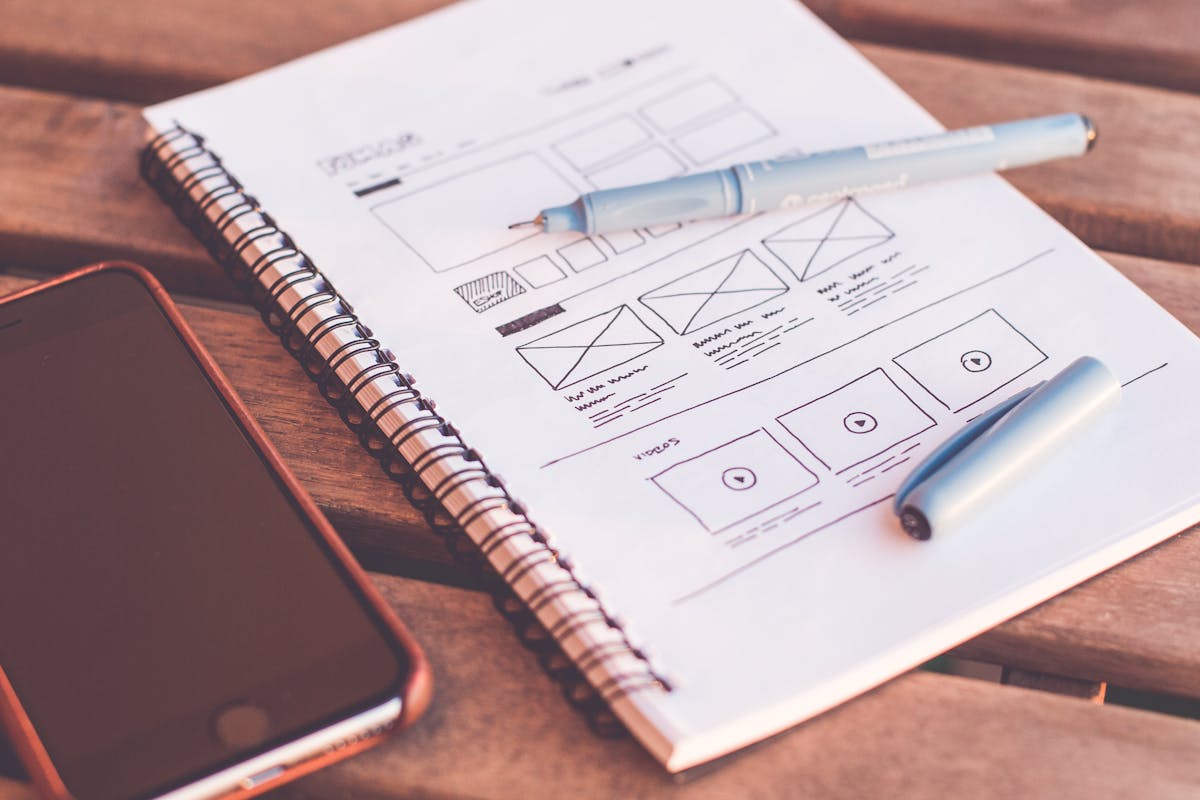
One-Page vs Multi-Page Website: The Answer Depends on One Thing Most Business Owners Get Wrong
One-page or multi-page? Most business owners pick the wrong one. Here's the question you need to answer first — and what your answer actually reveals.
One-Page vs Multi-Page Website: The Answer Depends on One Thing Most Business Owners Get Wrong
Every week, someone asks some version of the same question: “Should I get a one-page website or a full website?”
And every week, the honest answer is the same: it depends on one thing most people don’t ask about first.
That thing is: what do you need your website to do?
Not how you want it to look. Not what your competitor has. Not what’s cheaper. What does your specific business need a website to accomplish — and who is it trying to convince?
Once you answer that honestly, the choice is almost always obvious. The problem is most people skip that question and choose based on cost or aesthetics, then wonder six months later why the site isn’t bringing in customers.
What a One-Page Website Is Actually Good For (And What It Isn’t)
A one-page website places all content on a single scrollable page. No navigation between pages — just one continuous experience divided into sections. You scroll from the hero to the problem to the solution to the proof to the call to action.
This format has real strengths when the context is right.
Good use cases for a one-page site:
-
A single product or service with one clear offer. If there’s one thing you sell and one decision you want the visitor to make, a one-page site removes every distraction and focuses everything on that conversion.
-
Event promotions and launches. A conference, a product launch, a limited-time offer — where the goal is one action (register, buy, sign up) and the campaign has a clear end date.
-
Freelancers and consultants with a narrow offering. If you do one specific thing for one specific type of client, a focused single-page presence can convert better than a sprawling multi-page site with too many options.
-
Beta launches and MVPs. Getting something in front of people quickly before building out a complete site.
One-page sites are fast to build, fast to load, and focused by design. That focus is exactly their advantage — and also their ceiling.
Where one-page sites fall short:
-
Businesses with multiple services or product lines — each service deserves its own story, its own conversion path, and its own SEO.
-
Businesses that need to be found by people who don’t already know they exist.
-
Any business planning to grow — a one-page site doesn’t scale with you.
When a Multi-Page Website Is the Right Call for Your Business
A multi-page website gives each topic, service, product, or audience segment its own dedicated page. Each page can be found directly, linked to specifically, and ranked independently on Google.
This structure suits almost every established or growing business.
Good use cases for multi-page sites:
-
Service businesses with more than one offering. A travel agency that runs tours, handles visa assistance, and offers custom itineraries needs three different pages — each speaking to a different buyer, answering different questions, and ranking for different search terms.
-
Real estate firms and property businesses. Where trust, portfolio, and detailed information directly influence whether someone picks up the phone. A single page cannot carry that weight.
-
Any business that wants Google to send them customers. More pages means more surfaces to rank for different things different people are searching for.
-
Businesses that publish content. A blog, guides, case studies — these need their own pages to build topical authority over time.
-
Professional service firms. Law firms, accounting firms, consulting firms — where credentials, team, process, and portfolio each deserve attention and space.
If a stranger who has never heard of your business searches for what you offer, a multi-page site gives you far more opportunities to be found.
The SEO Difference Between Single-Page and Multi-Page Sites
This is where most business owners make the decision they later regret — and it’s the clearest reason to choose correctly upfront.
A one-page website can only rank for one primary set of keywords. There’s one URL, one title tag, one meta description, one H1 heading. Google indexes one page and categorises it for one primary topic. If that topic changes, or if you want to rank for something related but different, you have nowhere to put it.
A multi-page website can rank for dozens or hundreds of different search terms because each page is its own indexable URL with its own SEO signals. A travel agency with separate pages for “honeymoon travel packages Nigeria,” “Dubai group tours from Lagos,” and “Maldives holiday booking” can rank for all three — bringing in different customers searching for completely different things.
The maths is straightforward: a one-page site gives Google one opportunity to rank you. A 20-page site gives Google 20 opportunities.
One-page sites are not SEO-dead — a well-built, well-linked single page can rank for competitive terms. But the ceiling is hard and low compared to a properly structured multi-page site. If search traffic is any part of your customer acquisition strategy, that ceiling will hurt you.
How to Know Which Website Type Your Business Actually Needs
Three questions. Answer them honestly.
1. Do you rely on — or want to rely on — people finding you through Google?
If yes, even partially, you need a multi-page site. Full stop. The SEO ceiling on a one-page site will limit your organic reach regardless of how good the content is.
2. Do you sell more than one product, service, or offer more than one solution?
If yes, each deserves its own page, its own story, and its own conversion path. Cramming three services onto one scrollable section confuses buyers and dilutes SEO.
3. Is this for a temporary campaign or a permanent business presence?
Temporary campaign (an event, a launch, a promotion) → a one-page site is often the right call, and you can build it in days.
Permanent business presence → multi-page, always. Your site needs to grow as your business grows.
The most common and costly mistake: a business owner builds a one-page site because it’s cheaper and faster, then spends the next 12 months wondering why they don’t appear on Google. The site looks professional. It explains what they do. It just can’t rank for anything beyond the business name — because it’s one page competing against multi-page sites with ten times the indexable surface area.
For most businesses in Nigeria and globally, especially travel companies, real estate firms, and professional service businesses, the right answer is a multi-page site built with clear structure, proper SEO, and enough flexibility to scale as the business grows.
At Rangemax Tech, that’s exactly what we build — websites designed to rank, convert, and grow with you rather than box you in from day one. If you’re trying to figure out what your business actually needs, let’s have that conversation.
Keep reading
Is an aesthetic designed website or a leads driven website best for clients in 2026? Learn why beautiful vs converting website design dictates your revenue growth.
Read more →
People say AI has made web design irrelevant. They're wrong. Here's what AI can and can't do with your website — and why your digital presence matters more now, not less.
Read more →
Your website shouldn’t just look good—it should convert, load fast, and survive the 2026 algorithm shifts. Here’s your practical checklist for a faster, smarter, and more profitable online presence.
Read more →Want this implemented for your business?
Get a quick recommendation based on your goals, traffic sources and current setup.